Absorbing, mysterious; of infinite richness, this life - Virginia Woolf


Showing posts with label work. Show all posts

Wednesday, April 10, 2013

‘Never again’ means ensuring accountability for the genocide in Rwanda

See below an opinion piece we published in Pambazuka, marking the 19th anniversary this week of the beginning of the 1994 Rwandan genocide. 


Tara O'Leary and David Russell

2013-04-10, Issue 625

http://pambazuka.org/en/category/comment/86937


Printer friendly version

Rwanda has made significant steps in the pursuit of justice for victims of the genocide 19 years ago. But many suspected perpetrators living abroad have not been brought to justice and the government does not seem keen to fulfil its pledges to compensate survivors.

The recent high profile visit of British Foreign Secretary William Hague and actress Angelina Jolie to Gisozi genocide memorial briefly drew the attention of the international media back to Rwanda and to the 19th anniversary of the start of the Rwandan genocide on 7 April. The photographs of the visitors in the memorial's beautiful garden in Kigali provided a striking image as both figures paid tribute not only to those who were lost in 1994 but also to the victims and survivors. 

The abiding slogan ‘never again’ is often repeated at events such as these, but part of the commitment to ensuring that such events are never repeated is guaranteeing accountability for the atrocities of the past. To what extent do these words merely comprise useful phrases for formal occasions?

Efforts to address impunity for atrocities committed during the genocide have been multifaceted. In addition to the work of the UN International Criminal Tribunal for Rwanda (ICTR), Rwanda has made efforts towards justice in recent years, particularly in addressing fair trial concerns and legislating for the transfer of suspects back from the ICTR and extradition of suspects residing abroad. It is currently holding a number of genocide trials, including that of Jean Bosco Uwinkindi, and has pursued a policy of issuing extradition requests, which have recently begun to bear fruit with the transfer of Charles Bandora from Norway last month.

Genocide suspects living abroad too are increasingly unable to rely on their adopted countries acting as a safe haven. Quietly, prosecutors across Europe and North America have spent recent years notching up cases against suspected Rwandan perpetrators. These prosecutions are often based on the principles of universal jurisdiction, which provide for the prosecution of the most serious crimes such as genocide and war crimes irrespective of where these crimes were committed and irrespective of the nationality of the perpetrator or the victim. To date, suspects have been successfully prosecuted in Switzerland, Belgium, Canada, Finland, Norway and the Netherlands. Others have been arrested in the UK, France, Denmark, Germany and Sweden, while in the United States suspected perpetrators have been prosecuted for visa and immigration fraud in relation to their role in the genocide. 

However, impunity for genocide suspects residing abroad is still the norm, a fact only too clearly demonstrated by the low number of prosecutions. In 2009, for example, four suspects were released in the UK as their extradition was denied based on human rights concerns. Four years later all four men remain free despite the amendment of criminal legal rules in 2010 which would allow them to be tried in the UK. Similarly, complaints have been filed against at least 24 suspects living in France, some as long as 18 years ago, yet France has yet to bring a single accused to trial. Suspects reportedly living in other European countries, including Italy and Switzerland, have yet to be investigated by domestic authorities. 

These countries have the means and the necessary legal framework to prosecute known suspects who are living freely in their communities. What is needed however is the political will to make use of the existing system of international criminal justice and see these prosecutions through to the end. 

Victims also remain frustrated in their attempts to participate in justice processes, despite their right in international law to see perpetrators brought to justice, to participate in criminal justice proceedings and to access reparation to remedy the losses they have suffered.

Very few countries have allowed victims to join universal jurisdiction cases as interested parties, and only a handful of victims - in Belgium, Germany and the Netherlands - have been able to read statements about their experiences to the court or participate other than as witnesses. 

Attempts by survivors to obtain reparation have been similarly frustrated. Since the end of the genocide in 1994, the vast majority of survivors and indeed victims of international crimes generally in Rwanda, have yet to receive adequate reparation. This has been the case in Rwanda, where repeated promises from the government to establish reparation programmes have never been implemented, and at the ICTR, the statute of which did not include a mandate to make reparation awards. Universal jurisdiction cases have also generally failed to provide access to reparation for persons participating as victims. 

The theme for the commemoration of the Rwandan genocide this year is kwigira, which means self-reliance. Survivors and their communities demonstrate daily tremendous self-reliance, initiative and dignity in their efforts to rebuild their lives. As we reflect on efforts made to end impunity in Rwanda and elsewhere since 1994, all actors concerned should consider how justice efforts can best underpin the dignity and independence of survivors. Implementing longstanding promises to deliver reparation would go a long way to demonstrate the government's commitment to ensuring kwigira for survivors of genocide and other victims of international crimes committed in Rwanda in 1994. 


* Tara O'Leary is Universal Jurisdiction Coordinator of REDRESS and David Russell is the Director of Survivors Fund

Saturday, May 14, 2011

Abdulhadi suffered at least four facial fractures in detention and has claimed that he has been threatened


Bahrain: International trial observer refused entry – serious concern for the health and safety of Abdulhadi Al-Khawaja


An independent international trial observer was yesterday refused entry into the courtroom by the Bahraini authorities. The observer, a barrister from Tooks Legal Chambers in London, was mandated by Front Line to observe the trial of Abdulhadi Al-Khawaja, former Front Line Protection Coordinator for the Middle East and North Africa. She travelled to Bahrain to observe the hearing of 12 May. The trial started at the Lower National Safety Court on 8 May 2011.

Further Information


The Bahraini authorities' decision to refuse entry to international trial observers is in open contradiction to the statement issued by the Bahraini Lower National Safety Court on 8 May 2011 and widely publicised on Bahraini printed and broadcast media. According to the statement “attending trials is permitted for all civil society institutions, human rights organizations and media representatives to reflect the Kingdom's keenness to respect its international commitments in the field of human rights.”
Security officials refused to allow the observer in the courtroom on the basis that her ordre de mission had not been faxed one week in advance of the hearing. However, the hearing of 12 May had only been scheduled at the end of the opening hearing, on 8 May, thus making it impossible for the relevant correspondence to be faxed seven days ahead. Moreover, the authorities were informed of Front Line's intention to send a trial observer on 6 May, and were duly notified of the observer's credentials in advance of yesterday's hearing.
A security official explained to the observer that the trial was open to the public but that international observers, in addition to sending their ordre de mission a week in advance, must receive a written permission to attend. The official also added that this was a "military situation" and a "military institution" and that is why there were rules that needed to be followed. This appears to be in contradiction to public statements released by the Government of Bahrain declaring that the National Safety Court is not a military court.
The observer was repeatedly asked to leave the court premises, which she initially resisted. However, while in a waiting room together with family members who awaited to see the defendants, security officials repeatedly intimated to the families not to speak to the international observer. Furthermore, family member of Abdulhadi Al-Khawaja were told that they would not be allowed to see him unless the international observer left the court premises. The wife and daughters of Abdulhadi Al-Khawaja were not allowed to meet him despite the fact that observer immediately left once this threat was issued.
According to witnesses to the court hearing, Albdulhadi Al-Khawaja made several attempts to make a statement but was repeatedly silenced. However, he eventually said loudly that he had been threatened that very morning (12 May) and was fearful for his life.
As earlier reported, at the 8 May hearing Abdulhadi Al-Khawaja presented evident signs of ill-treatment and possibly torture. He reportedly suffered four fractures to the side of his face and continues to have problems eating. During his incommunicado detention he was reportedly admitted to the military hospital of al-Riffa to undergo a 4-hour operation.
Front Line deeply regrets the decision of the Government of Bahrain to hide itself from international scrutiny, despite earlier public declarations stating otherwise. Front Line reiterates its shock at the violent treatment Abdulhadi Al-Khawaja has received and remains seriously concerned about his health and safety in detention.
Front Line urges the Government of Bahrain to uphold “the Kingdom's keenness to respect its international commitments”, allow international trial observers, and effectively investigate the serious allegation of torture and ill-treatment in detention

*Blogger has been inaccessible from Kosovo for the last day or two so I haven't been able to post this until now, but the signs regarding Abdulhadi's detention are bleak. He has reportedly suffered four facial factures, had to have four-hour surgery following a fracture of his jaw, and is having trouble eating. His family were only allowed to speak to him briefly but reported that he looked very unwell. International observers are not allowed to monitor his trial, and he was not allowed to make a statement in court. He reportedly shouted that he had been threatened and was afraid for his life.

This is very upsetting.

Also read reports by Amnesty and Human Rights Watch.

Thursday, April 21, 2011

The Next Step: Kosovo

Time to make an annoucement: very shortly this blog will no longer be about life in Bosnia. It doesn't feel like very long ago, but when I started blogging again back in October I mentioned that my contract in Sarajevo would run for six months. And how those six months have hurtled past: I finish my job here tomorrow.

I know that I've never written about my work here, and have rarely if ever mentioned The Organisation. That has been a deliberate decision on my part. Not that the work I do is so very confidential or secret, not that I can't talk about it - at least in a generalised sense - with family or friends, and I'm sure they'd tell you that I certainly don't hold back in doing so when the mood strikes me! But talking about how you spend your days and the issues you work on is different to broadcasting them in print over the airwaves. Perhaps particularly given my recent discovery that you out there in the great unknown are reading this, I am glad I made this decision. Any opinions I might have expressed here would have been entirely my own and not those of my employers or of the International Community in Bosnia per se. But it's hard to separate personal opinions and professional responsibility, and I have never felt that this was the appropriate forum.

Suffice it to say now, as I tidy up my desk and hand back my identity card, that my time here has been an amazing professional experience. I have been working on issues in which I have a great personal and academic interest and which I feel are significant indicators for the path of transition in this country - namely, war crimes trials taking place in the local courts here, conditions in prisons, protection of victims and witnesses and In particular, and perhaps closest to my heart, I have focused on gender issues: sexual violence and rape which took place during the war, as well as post-conflict domestic violence. It hasn't always made for pleasant days at the office, and at times I have found it tough going to immerse myself in the graphic details of these phenomena on a daily basis, but legally I find these issues fascinating and getting to work on them has been a privilege. I won't go into it any more than that here. I have been given some amazing professional opportunities, and my colleagues and supervisors have been wonderful - I can't thank them enough for the faith they've showed in me, willingness to help me learn and, I have no doubt, their patience. It's been a great working environment and that has made a huge difference in fitting in.

You might not have known about it reading this, but my professional experiences have impacted strongly upon the personal observations I've been writing about here. The two are very much intertwined and I'll be honest in saying that I'm pretty gutted to have to finish now. I didn't know what to expect of Bosnia before moving here and, to be honest, never expected to develop a huge affinity with this city and country. But now that the narrative has taken a sudden turn and events are moving quickly, I find that I feel a certain sadness in leaving. I still feel like I'm only getting to know Sarajevo as a city, am comfortable with a great little personal set-up. I've met a really amazing group of people: interesting, well-educated, open-minded and adventurous, together they created an environment which was always stimulating and challenging - in a way reminding me of LSE, for those of you who've heard me talk about my time there. They've made my time in Sarajevo the formative experience it has been, and although most of them don't know about this blog, I feel that I owe them a thank you: the coffees and the house parties and the political arguments would have been meaningless without them.

I feel in many ways like I was only getting started here. Having to leave just at the point at which you start to feel effective is extremely frustrating - and after almost two years of short-term work like this it doesn't get any easier living out of a suitcase, finding short-term accommodation, constantly saying goodbye to friends and worrying about what will come next.

But such is the nature of work in this line of business, and the good news is that I'm not going far and will be staying in the region. I'm transferring to The Organisation's Mission to Kosovo at the start of May, and will be based in Pristina for the summer. After that - who knows. But stay posted for some new observations and musings and random adventures from a new (to me) part of the Former Yugoslavia.

And if anyone has any buddies in Kosova or any recommendations for the best pivo in Pristina, that's what the comment box is for!

In the meantime, I'm off on a roadtrip to Belgrade this weekend, making a midweek jaunt to Croatia to (hopefully) soak up some sun on the coast, and throwing one last party of a Sarajevo weekend. At least I'm easing myself gently into making the next move.

Saturday, April 16, 2011

The Power of Blogging: Free Abdulhadi Al-Khawaja

Today, over a year after I first started started writing here, I made the mind-blowing discovery that I can track information and statistics about who views this blog. (Me? Technologically slow on the uptake? Behind the times? What??). Alas, Google doesn't so freely share the frightening mountains of information it hoards about all of us to tell me the names or IP addresses of you folks (damn protection of anonymity eh?) but it does provide the number of views per country, and the websites which have been used to find me.

All of you dear readers, I had no idea that you were out there. I am overwhelmed! It turns out that far more people are reading this than I ever imagined. I always presumed that the only people who found this page were friends or acquaintances who I had mentioned it to or who had picked it up on Facebook or the likes. But it's not so; the numbers don't add up. There really are people out there in the great beyond who find me, and who might even be a smidgen interested and read a little bit.

Who would have known, for instance, that somebody or some bodies in South Korea have looked at my page 44 times? Or that there are a hell of a lot of people in Russia interested in this? A Russian search engine is, in fact, the primary sites which refers people here after Google. I don't know anyone in Denmark, or France, or Germany who might be the people reading this there. More people in the US read this than in Ireland, so dear family and friends back home - you're outnumbered. I am shocked!

So to all of you, whoever you are, thank you for making my day, and thank you for reading. I hope you stay and look around a little while as we bump into each other in cyberspace and pass like ships in the night-time blogosphere. I hope you even find it a little interesting. But most of all, I hope you start commenting because I'd love to hear more from whoever is reading this!

Particularly because the most interesting finding of all provided by these new-fangled statistics was that the post with the second-highest numbers of viewings is that in which I wrote about the release of Aung San Suu Kyi and the (then) ongoing detention of Ali Abdulemam (the most-viewed page consisted of very pretty safari photos from Africa). In other words, people have been reading the posts in which I tried to raise awareness and attention about serious problems or issues I cared about. Of course I know how search engines work and how strategically-titled key words can pop up when requested. But I just never had concrete evidence before that it ever actually worked. And it's encouraging.

Which makes it interesting that I came across these statistics today, because all week I have been somewhat torn as to whether I should post about the beating and arrest of my former colleague at Front Line, Abdulhadi Al-Khawaja. A well-established human rights activist in Bahrain, Abdulhadi resigned recently from Front Line to focus his work on the ongoing protest movement in the country. Last week the police raided his daughter's house where he was staying, beat him unconscious, assaulted several other family members, and arrested him along with two of his sons-in-law. Since then his place of detention is unknown, he has had no contact with a lawyer and has reportedly been deprived access to medication for an ongoing health condition.

My first instinct was to write about this here. I worked with Abdulhadi on a daily basis during my time with Front Line and although he was usually based in Manama he visited Dublin several times during the year I worked there. I saw him most recently last autumn. He is an utter gentleman and, as I heard one friend describe him during the week, "a kind and gentle soul". And now he is at high risk of torture, in a country where increasing numbers of peaceful protesters have been been dying in detention.


So of course my first instinct was to write about it because this needs ATTENTION. Immediately. But, I thought, I feel like I lecture everyone about this stuff all the time. I bang on and on about human rights and arrests and injustice and people who are handed a rough lot in life. The friends and family who (I thought) read this blog are no doubt bored to death of my lecturing them on "the issues". Oh how very middle-class and well-educated and liberal of me. Yes, of course we all should do something about it, but don't people get tired of hearing about these things that are terrible but that they can't really do anything about?

Well, two things have struck home with me today. The first is that the response of Abdulhadi's daughter, Zainab Al-Khawaja, to the arrest of her father and husband puts me to shame. After seeing her father beaten unconscious in front of her in her home and having her husband dragged off to an unknown prison, she publicized the arrests on her blog and Twitter, began giving interviews to the international press, wrote a powerful open letter to Barack Obama and declared a hunger strike. Despite the fact that she is a woman living in a repressive Arab state, Zainab Al-Khawaja is the embodiment of how strong, empowered and amazing women can be, regardless of whether they wear a hijab or burka or not. Zainab Al-Khawaja is doing something about it and I find her inspirational.

So no matter how idealistic and naive and plain old cheesy this sounds, the second thing that struck me today, looking at my statistics, is that surprisingly I can do something too, something which might actually have some effect. I have no idea who you are or where you read this or how you come across this, but there's a small chance that you - you back there! - might read this page. And I hope that you, who might be interested in the events taking place around the world in this tumultuous year, might come across this post. A decent, kind-hearted and committed individual has been brutally beaten, arrested and is at high risk of torture because he advocates democracy and an end to the abuses he is now subject to.

So send a letter, sign a petition or show your support for Abdulhadi Al-Khawaja and all other political prisoners and peaceful protesters imprisoned in Bahrain.

Details on sending a letter to the Bahraini authorities can be found here.

Wednesday, February 23, 2011

Congratulations Ali!

Last night, in an apparent move to appease the protesters who have been gaining increasing attention in recent days, the King of Bahrain ordered the release of a number of the country's political protesters. Ali Abdulemam was released at about 2.00am. Apparently he had no idea of the ongoing protests and instability in Bahrain until after his release.


I've previously written about Ali here and here. The BBC spoke to Ali after his arrest today and report on it here. Front Line reported on his release this morning.


It's a bit unnecessary to say that this is great news. Often enough in Front Line we used to lament the lack of good news in our line of work; it comes few and far between the reports of atrocities and violations. So today I was happy just to have the opportunity to email my former colleagues and raise a coffee mug to Ali, his family and his fellow prisoners of conscience who have finally been released. And indeed to Bahrain, where protests in recent days have seen huge sections of the population peacefully taking part - up to 100,000 in a country of only about 600,000 people - and which so far has avoided the large scale violence of Libya.


I don't want to get too swept up in the euphoria or the "feel good" moment pictured in Manama last night. This does not solve Bahrain's problems and will not make the protests go away (nor do I want it to - and I'd be certain that Ali doesn't). And the release of these political prisoners today should not detract from the fact that many others - perhaps up to 300 - remain unjustly in detention. But in celebrating this small achievement of justice as part of the larger picture of ongoing human rights violations in the Middle East region, I feel that it is a moment worth acknowledging and enjoying for what it is.


I think this picture of Ali reuniting with his wife says it all. But perhaps even more so, maybe the meaning of this release is embodied best in this photo below, taken this afternoon of Ali walking to Pearl Square in Manama, the centre of protests and Bahrain's Tahrir Square. Probably unimaginable even days ago.


Photo courtesy of AP

Sunday, November 14, 2010

Aung San Suu Kyi and Ali

As anyone who knows anything at all about me might imagine, I spent much of this weekend following the news of Daw Aung San Suu Kyi. For those of you who might have spent the last few days on Mars, yesterday Aung San Suu Kyi was finally freed unconditionally after spending the last seven years under house arrest. She has since called for reconciliation in Burma in recommencing her political work. Her release has been met with near-universal praise from world leaders and Nobel prize winners, while the world media has briefly flocked back to Burma to report on this good news.


It goes without saying that this news is hopeful, that I am uplifted and encouraged by reports of Burmese shedding tears of joy in the streets of Rangoon, for once unmolested by the police and security agents. Of course I believe that Aung San Suu Kyi is a deeply inspiring figure, probably the Nelson Mandela of our generation in terms of visibility, charisma and popular sympathy. Actually, I think not enough is made of her role as a woman in world politics, of the particular struggles and sacrifices made by women confronting and wielding power.


I also wonder how long she'll be allowed to remain free: previous releases in 1995 and 2000 were followed by rearrest on the flimsiest of pretexts. I cannot see that this release, coming a week after fraudulent elections were 'successfully' concluded, really constitutes the beginning of anything given the strength with which the Burmese junta is willing to enforce its position of authority.


For me a larger issue is no matter how euphoric or cautious, much of the media reporting about Aung San Suu Kyi's release has failed to draw adequate attention to the 2,100 other political prisoners who remain in Burmese jails, many of them detained for taking part in the 2007 protests. Most of them are nameless, faceless and outside of human rights circles, forgotten.


I think one of the things I most admired about Front Line, before and after I worked there, was it's focus on 'the little guy'. Sometimes we used to jokingly refer to the human rights 'rock stars', to the Aung San Suu Kyis, Shirin Ebadis, Liu Xiaobos and Balthazar Garzóns of the this world, along with many others whose names might not be known internationally but who can at least count on support from civil society within their own countries: the Yuri Melinis, Nabeel Rajabs Oleg Orlovs and Emad Baghis. No one can disparage the difficulties they face or the sacrifices they make; take Shirin Ebadi's ongoing exile or Liu Xiaobo's ongoing prison sentence if you want a case in point. It doesn't always translate to protection, but there are immense wells of support for those activists in crisis: the media will report with outrage, students will sign petitions, NGOs are interested and the diplomatic community becomes available.


But for every rock star and for all the applause, there are thousands who run equal risks and pay equal costs without the protection, support and fame which 'fame', of its kind, can bring. With every respect to Aung San Suu Kyi, in the eyes of the world media it helps immensely to be beautiful, elegant, eloquent and tragic. She's everyone's favourite romantic heroine.


I found myself wondering this weekend about the 2,100 other prisoners and whether they had even heard about her release, or whether it meant much. And for some reason, probably because it feels so much closer to home, I found myself thinking about Ali.


Some of you have heard Ali's story already. Ali Abdulemam is - was - the director of one of Bahrain's only independent online news websites, and within online and activist communities was known internationally for his work on freedom of expression and media issues. He spent several months with Front Line in Dublin on a fellowship, working with us in the office, staying in the organisation's apartment a few doors down the street. He ate lunch with us interns, told us stories about Bahrain, promised to bring us Middle Eastern food. He won a staff pitch and putt tournament and we teased him that he'd only won because he had the best golfing fashion sense. By the open fire in the pub he played around with my camera and took pictures of all of us which managed to survive the robbery of my camera and laptop a few weeks later.


On 4 September, a few weeks after his return to Bahrain, Ali was arrested along with about 28 other activists, writers, politicians and clerics. All were accused of taking part in a "terrorist plot" to execute a "campaign of violence, intimidation and subversion in Bahrain". We knew that he was being held incommunicado, without access to a lawyer or his family. We knew that he was most likely being tortured. He and 10 others are currently subject to an unfair trial whose date is continually deferred (from the 28 October, then to 11 November, now until the 25 November), most likely in what I see as an attempt to deter trial monitors from attending and to frustrate defence counsel from adequately representing their clients.


The deferred trial hearings did at least serve the purpose of finally allowing Ali and the other detainees to describe their experiences in detention over the past two months. Ali stated that:


“I was subjected to torture, beatings, insults and verbal abuse. They threatened to dismiss my wife and other family members from their jobs. I was interrogated in the prosecution without a lawyer, and the officer there who appeared to be from the National Security dismissed my denials to the allegations put against me. He never allowed me to respond to the questions he was asking, but rather answering them himself whilst I was stood behind the door as I was not permitted to sit during the investigation".
A blog run by Ali's supporters has in addition reported that he was hung from the ceiling, blindfolded, beaten, cursed and insulted.


If and when Ali and his fellow prisoners of conscience are released, the world media will not report on it. If previous patterns of arrests, tortures and trials are anything to go by, this entire process can be considered a form of punishment for their activities so far, as intimidation against continuing with such actions or activities in future, and of course as a warning to others not to step out of line. Ali he has a wife and young children and extended family at home, and when it comes to personal cost his actions and activism and bravery - to them, very understandably - might or might not seem so clear-cut and worthy of applause. It is perhaps easier to be the one applauded than to be the one left behind.


Aung San Suu Kyi has not been tortured like this, at least not physically in an interrogation cell (on the other hand, she was preventing from seeing her dying husband before he passed away, for instance). I know that one cannot compare different forms of suffering, nor try to quantify the effects of physical 'versus' emotional or mental torture. But does the release of one Aung San Suu Kyi only serve to distract from the very many others?


I suppose that all I want to say is that this weekend I congratulate Aung San Suu Kyi and the Burmese people, but that I have spent the past couple of days thinking about those who are not congratulated. For myself, I thought about Bety Cariño and Georges Kanuma (both of whom I wrote about before), and I thought about Ali. And I only want to ask you to do the same.


Monday, October 25, 2010

I'm back!

Greetings from Sarajevo - that's right, in Bosnia.

Only three months after leaving Uganda, I've begun another spontaneous adventure. This is as much a surprise to me as it might be to you - I was offered this internship only about three weeks ago, I took a plane on Saturday, and here I am.

For the next six months, I'm going to be working on justice and legal issues - specifically on the war crimes trials being held in the local courts here, which are increasing now that the court in the Hague is trying to wrap up its business within the next year or two. I'm working in a large international organisation - I won't say which one in case I ever want to entertain myself making catty little comments about it here on a future basis. Suffice to say its not the not the organisation I worked for in Uganda... I leave it to your imagination.

I bid Front Line an emotional farewell last week. I can't believe my year there has come to an end already. They were incredibly good to me, and were a home to me as much as an employer - they literally put a roof over my head for a couple of weeks at one point, besides making my Ugandan, Armenian and Swiss adventures possible. As a parting tribute, as a chance to make it public - Front Line and your valient human rights defenders, I salute you!

Hopefully I'll keep up the blogging much as I did down on the equator - I didn't realise how much I'd enjoyed writing until I didn't have the excuse to blog back home. Thanks to my beautiful new shiny Sony Vaio and a pretty reasonably decent internet connection (take that, Uganda!), I'm actually looking forward to trying to upload here without spending half an afternoon on it...

So stay tuned for some musing and updates on this cosy little city.... although no photos this time around I'm afraid, thanks to the asshole who robbed my house in Dublin last week. The robbery could have been worse - I was insured - but the timing could not. Leaving home without a lens has been excruciating. Funny to think how I attached myself so much to that black little mechanical eye on the world.

More to follow soon....

Tuesday, July 20, 2010

Ireland

I'm home.

There's a whole world contained in those two words, most of which I can't really explain here. If there are any takers out there for a pint and a boozy chat, it might be possible. On paper (can you call a blog "paper"?!) I don't have the time or the energy right now. I would say that I haven't formulated most of it yet, except that - as I always knew would be the case - after only four days back in Ireland, my Ugandan experience is already slipping away from me, and I have a terrible fear that if I don't write about it very soon it'll slip away from me forever.

I flew out from Kampala on Friday night, and arrived back in my small little Irish home town on Saturday lunchtime. By Sunday afternoon I was already on my way to Dublin and on Monday morning I was back at my old desk in the office, fumbling my way uselessly through the same work I was fluent with a few months ago.

There's so much I haven't written about - so many things happening, so many places seen, new people befriended, new journeys made, new events (some magical, some tragic and horrifying). This blog was as much for myself, to remember things, as it was for anyone to read about them. The month of lost blogging thus really does seem a loss - too many things I'll have forgotten, some day. It's not that I gave up blogging the past month, its simply that circumstances conspired against it. Armenia swallowed a large chunk of my Ugandan time - I spent ten days away. I spent a week recovering (literally - a large proportion of the week after I came back was spent in bed recovering from some kind of bug I picked up along the way). I spent another week almost totally without internet in the office, frantically trying to wrap up the work I needed to finish before my successor, Daniel, would arrive for a handover. My last week in the office was only three days long, all of which was swallowed by workshops, speeches and the launch (a big deal) of the Human Right's Centre's first report. And then I spent about a week traveling with two friends through southwest Uganda and Rwanda before coming back to Kampala to fly home.

It would take me days to write about our Great East African Road Trip. Suffice to say it involved:
  • Crossing the Equator for the first time. Disappointingly the world is not as upside and back to front down there as one would hope.
  • A series of long-winded bus journeys, the last of which was ten hours long, which all seemed to involve broken bags, babies on laps, questionable roadside food, near-death experiences on Rwandan mountaintops, Nigerian soap operas, Christian music, the total absence of personal space, amorous Ugandan and Rwandan men, out of date newspapers, postal deliveries and sore bladders.
  • An inexhaustible succession of Scandinavians of various shapes and sizes.
  • Africa's deepest lake, and wooden dugout canoes upon it, and fish inside it, diving into it, and lying in hammocks beside it.
  • Day-long card games, which no one ever won.
  • An earthquake. Yes, really, an earthquake. It was a good 5-10 seconds long and as thrilling as it was bloody frightening.
  • Crayfish. Oh god, so much crayfish. So delectably good. Sigh.
  • Omelets. Some good, some bad, always reliable.
  • Unfathomable and indecipherable exchange rates. I currently have six different currencies in my purse.
  • Walking to the Congo, standing and looking at the Congo, and ultimately failing to get into the Congo. Must go back to climb the volcano another time.
  • Incorruptible Rwandan border guards. We would know - we tried our very best to corrupt one, and emerged morally bankrupt. Absolute shame on us.
  • Children - hugging us, squealing at us, being dumped on our laps. Life affirming.
  • Genocide memorials. Really nothing witty I can say about this.
  • Terrorism.
This last one is nothing to joke about either. 76 people were killed in Kampala on 11 July while they watched the World Cup Final. A week later there is still very little I can say about this. All the usual adjectives apply - sickening, horrifying, terrifying - and all of them seem very pointless because they are so obvious. Something like this deserves something more than words, or perhaps something less. Perhaps only silence can suffice.

We were safely in Rwanda when we heard the news, and thankfully no friends or colleagues were affected. This is less surprising than you might think - one of the bombs, at the Ethiopian Village Restaurant, went off in my neighbourhood, Kabalagala (which I've written about before), about halfway between home and the office. I've driven past twice a day for the past three months; I've eaten there before. If I had been in Kampala I probably would have been in a neighbouring bar or restaurant that night - in fact a good friend of mine was in a place just up the street and heard the explosion. But noises and whooshes and bangs happen all the time in Kabalagala, especially on the night of the World Cup Final, and no one took any notice. Fifteen people died in that whoosh.

I've been trying to explain to people that while you in Ireland or Europe or North America might think that these things happen "out there" all the time, in those far flung places whose names are linked to suicide bombings every week, these things did not happen in Kampala. Security concerns in Kampala involved taking precautions against petty theft, or avoiding political rallies and protest demonstrations where rowdiness and beatings are a growing trend in the run-up to the elections. No one worried about bombs and fundamentalism and extremists. Kampala was - and is - a city of bars, and shacks selling beers, and restaurants with live music; a town obsessed with football, where even the rundown local joints screened satellite channels from South Africa; a place where a typical Friday night out involved changing your bar every hour until 5am, before sipping beers through the sunrise and dryly taking a boda boda home after grabbing the first rolex from a street vendor at 7.00.

Bombs in bars didn't happen in Kampala. I only returned on Thursday night before flying out on Friday, but you could see the place was jumpy. People are calling in suspicious packages to the police, and shopping bags are checked by security guards going into shopping centres. The embassies send regular text messages with up dates to ex-pats. Yet even still, town was buzzing. "The jam" was as bad as ever, the street food sellers were doing their usual trade, and although the Western muzungu bars were probably deserted, friends have told me wild stories about spontaneous house parties that were thrown up around town all weekend.

I hated hearing about them: I wasn't there. I was watching soft, gray Irish rain beat off the window panes in Kerry, paying €3 for a cup of the coffee I'd so craved, hearing - before I saw - the girls in fake tans and tracksuits. Well, that's a harsh invocation - Ireland's really not that bad. Today, my second day at the office, was better than yesterday, my first. True, the sun was shining today, and I'd forgotten how beautiful Dublin is when you take the train out along the bay; had forgotten the smell of the sea; was startled once again by how O'Connell Bridge at 8.30 on a fine summer morning has the strange quality of a film set - tidy, vivid, wide, calm. And yet, still, what continues to upset me is not that I'm so unhappy here but the fact that I'm already settling back in; the fact that I can get on very well outside Uganda and that I'm already forgetting it and re-adjusting, faster than I want to.

You don't realise how immersed you are in Africa until you leave it; going to Armenia and then returning was in this sense a very strange and emotive experience for me. Reverse culture shock for me isn't, after all, the unfamiliarity of what should be the home environment. It isn't no longer feeling at home in your own place, amongst your own people. It isn't seeing the same old same old with new eyes, marvelling at what you never bothered to notice before.

Reverse culture shock for me, upsetting and disorientating, is in fact the inevitable, crushing sameness of everything when you come back. Nothing has changed. This is obvious, as much to me as it is to you, reading this, and its the almost-sense of shame and stupidity that comes from knowing this and recognising this, the whole, well, what else did you expect?

I've tried to reason it all out the past four days. The obvious answers are: you have changed, and home has not. You have changed, but the people at home have not, and most of them cannot relate, and most of them really aren't all that interested anyway. Other friends who have traveled to the developing world have talked to me about how friends, family and acquaintances project a defensiveness when you return - even if you were never to talk about your experiences, they expect you to, and expect you to express dissatisfaction - which they take to be a criticism of themselves - and expect you, somehow, to project a sense of superiority because of what you've done and where you've been. And even if this couldn't be further from the truth, it won't make any difference to those who'll keep you at arm's length because they expect to find you changed. And you don't want that to be the case; you just want your friends, who you very likely missed while you were away.

Reverse culture shock is all of these things, and yet for me that's not exactly it either. In addition to all of that, there is the sameness of things flattening everything else out. The sameness took the good out of all the modern conveniences that I looked forward to my last week in Africa, trying to console myself at the thought of going home: the long hot showers, the drinking water direct from the tap, the bewildering choice of food, the fast internet, the being able to go out alone after dark. Home is so utterly and crushingly the same, from the instant that you get back here, that all these things are just the same too, unnoticed and unappreciated. I thought I would have forgotten how to drive, or would marvel at the hundreds of choices in Tesco, but I did not. I thought I'd never been able to choose what to eat for lunch, but I just got on with it, and that was what was most upsetting.

No matter how long I'd been in Uganda, no matter how comfortable I felt there, every so often there would come a moment - of beauty, of kindness, of friendship or simply of something random that could only happen in Africa - and you'd jump in your own skin, look around and think - This is amazing. How did this happen? How did I get here? I can't believe this is my life now!

Yesterday, running late for work, lacking change for the bus, getting wet in the rain - that crap Irish half-rain, muggy and humid with mildness - it was my very first day and yet simultaneously so eternally as if I'd never been away. And I looked around and though.... how did this happen? how did I get here? is this really my life?

Because when I thought about where I had been only five days ago - bumping on buses over the Rwandan hills and the Ugandan plains, laughing about nicknames with Jenny and John, being welcomed by the Rwandan border guards who remembered us from passing through on our way the week before, flying on a boda boda through the balmy Ugandan evening, being called Auntie by Mama Sharon and Paul the boda driver, looking at Kampala's twinkling nighttime hills with Paulo, having pizza while surrounded by friends on my sofa, getting ridiculous text messages from Hubert, seeing the tears in Sharon's eyes, guiltily thinking of the people I didn't even get to see before I left, eating chapatti, gossiping over lunch with everyone from the office, listening to the birdsong and the rooster crowing and the call to prayer in the morning, counting banana trees on my way to the airport - I had no idea how I had come from there to here in what seemed like the passing of a few moments. The idea that all of that was over was so deeply upsetting. I wasn't ready for it to end. I still amn't.

I don't know if I'll keep blogging. If I have the time there are stories and thoughts about my last weeks there which I'd like to write about. I wouldn't be surprised if this is the kind of thing which simply loses momentum in the atmosphere of home, although I try to tell myself I'll be different this time. Perhaps this is my last entry, until my next travels; the thought makes me think of the very last anecdote I have from Uganda, and of how perfect - in summing up, and in all the hopes I have for the future - it was.

On my last morning I went to a supermarket to buy an extra bag for my luggage. I took a cheap holdall to the till, where the man whose job is to pack your shopping bags picked it up and turned it over, folded and unfolded it, opened and closed it, and handed it to me as if he'd made it ready for me.

"Thank you please. This is a very good bag," he said, and it wasn't small talk. He really meant it. "You must be planning a journey if you are buying a bag. Eghh. I wish you safe travels ,and good health wherever you will go with it."


Monday, June 28, 2010

Armenia


In lieu of writing about Armenia, I'll show you a little of it instead...


Island monastery on Lake Sevan

Lake Sevan

With Orsi and Nabou from the Geneva office

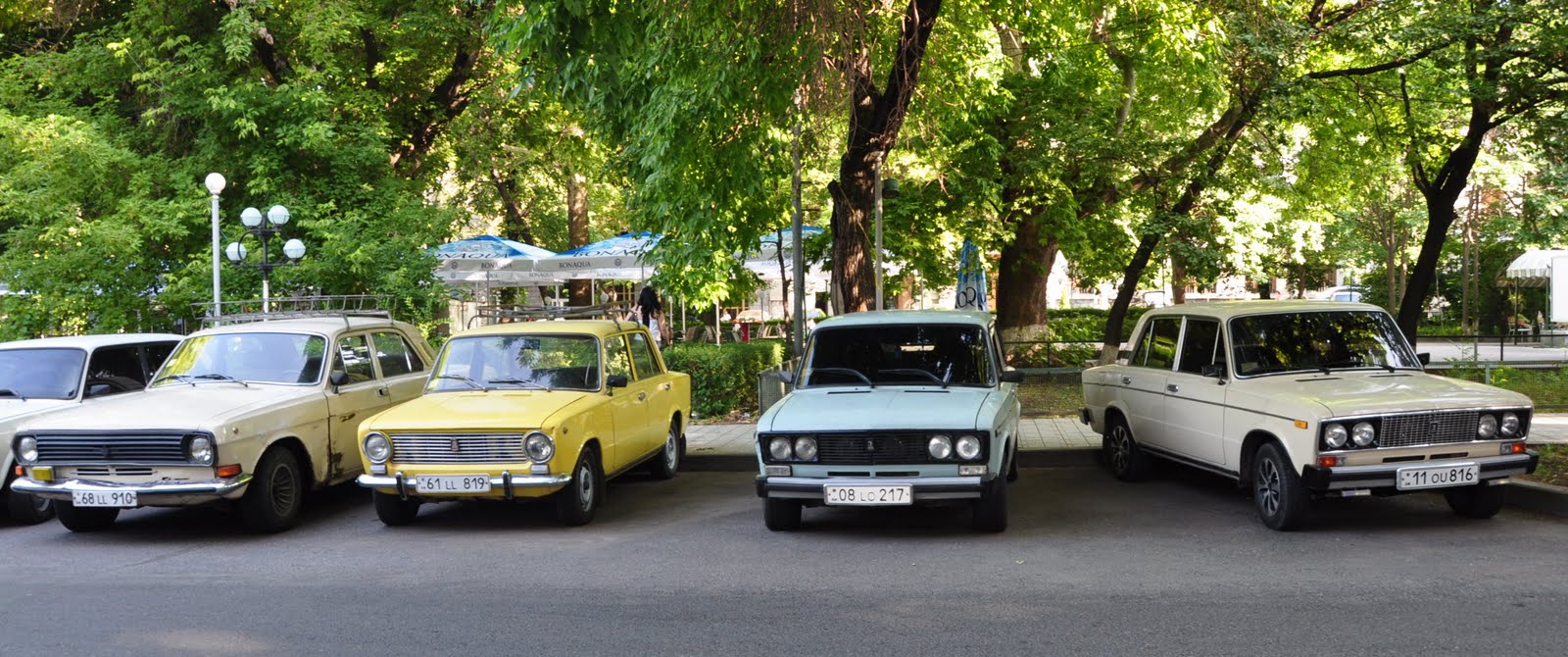
Four little Ladas, all in a row... every second car in Armenia is soviet-era kitsch


Still cannot believe how fab this one was!


Friday, June 18, 2010

Armenia: UN expert urges Government to address ongoing obstacles faced by human rights defenders

The extended version of this kept us up late last night....!


Armenia - UN expert urges Government to address ongoing obstacles faced by human rights defenders

YEREVAN (18 June 2010) – The UN Special Rapporteur on the situation of human rights defenders, Margaret Sekaggya, urged the Armenian authorities to publicly acknowledge the role and importance of human rights defenders, and to address the ongoing obstacles faced by them in the country.

The Special Rapporteur welcomed Armenia’s commitment to promoting respect for human rights, as demonstrated by its ratification of a wide number of international human rights instruments, and acknowledged the challenges faced by the Government of Armenia and its law enforcement officials.

“I am worried by documented cases of ongoing violence, assaults, intimidation, harassment and stigmatization of defenders, in particular journalists,” the UN independent expert said at the end of a five-day fact-finding mission to Armenia*, which was the first visit to the country by a UN Human Rights envoy since 2000.

Ms. Sekaggya noted that “these cases would seem to illustrate an apparent culture of impunity in Armenia which impinges upon the work of human rights defenders. This impunity appears to be closely related to the deep-rooted problems within the police system as well as with the shortcomings of the justice system.”

The human rights expert urged the authorities “to undertake prompt, thorough and transparent investigations of all human rights violations, in particular attacks against journalists, in order to create a safe and enabling environment in which human rights defenders can carry out their activities.”

“I would like to reiterate a request I made to the Prime Minister during my meeting with him asking him to publicly acknowledge the role and importance of human rights defenders in achieving a flourishing, pluralistic and democratic society,” she said.

The UN Human Rights Council envoy also drew attention to “the significant constraints imposed on the exercise of freedom of assembly in Armenia,” noting that “in a democratic society, the right to hold peaceful, open and public demonstrations, including indoor assemblies, should be available to all individuals without undue restrictions.”

“I also add my voice to those who have already expressed serious concerns about the amendments to the Law on Television and Radio. If signed into law by the President of Armenia, these amendments will further restrict and seriously hamper the plurality of voices and opinions available to Armenian society,” Ms. Sekaggya stressed.

In this context, Ms. Sekaggya recommended the Government “to implement a comprehensive programme of reform within the police service, to immediately take steps to address the shortcomings of the justice system.” In her view, “this should be carried out in conjunction with the implementation of an extensive anti-corruption strategy in order to ensure accountability within government structures.”

The UN independent expert emphasized the need to fully consult, include and incorporate the views of civil society and human rights defenders in decision-making processes; as well as addressing the specific needs of human rights defenders, including women defenders and lesbian, gay, bisexual and transgender (LGBT) defenders within the National Action Plan on Human Rights.

The Special Rapporteur will present her report to the United Nations Human Rights Council at its sixteenth session in March 2011, and will make further recommendations for the consideration of the Government and other stakeholders.

Margaret Sekaggya, a lawyer from Uganda, was appointed Special Rapporteur in March 2008 by the UN Human Rights Council. She is independent from any Government and serves in her individual capacity.

(*) Read the full statement by the Special Rapporteur:

http://www.ohchr.org/EN/NewsEvents/Pages/DisplayNews.aspx?NewsID=10168&LangID=E

OHCHR Country Page

–

Armenia: http://www.ohchr.org/EN/Countries/ENACARegion/Pages/AMIndex.aspx


Thursday, June 17, 2010

Real Armenian Kitchen


Top Five Things About Armenia
  • Long days: at 10pm it's still bright, 27 degrees, and people are swimming and lounging around on sunbeds beside the pool (In Kampala it gets dark at 7pm all year round)
  • No mosquitoes!!! In Uganda, lounging around a pool after 6pm would involve so many mozzie bites that it wouldn't make life worth living
  • Strong showers. Showers in Africa dribble, for obvious reasons
  • Fast internet. My god, its life changing. In Kampala I usually read newspaper articles or go off and watch the kettle boil while waiting for emails to open or attachments to download...
  • Coffee. Coffee, and wonderful bread. And mezze. And dolma. Fruit. Salad. Fresh cherries. Cheese. Copious amounts of vegetables, in all the colours of the rainbow. And did I mention the coffee?
We had lunch Sunday, our only free day, at "Real Armenian Kitchen", a restaurant recommended to us near the hotel. Because it was Sunday and we're in the government/business district it was very quiet so we were the only people there besides some people who knew the owners - everyone was sitting around watching the football on a flat screen tv. We had an overwhelmingly warm welcome and service from them, but the problem is we have no idea why. There were three possibilities:

  • Armenians are genuinely lovely, warm people who treat guests with great generosity
  • The restaurant owners were good businessmen who were upselling hard and wanted us to come back and bring more business
  • They don't see many Africans around here (we have two - Margaret, who is Ugandan, and Nabou, who is from Senegal)
Which do you think is more likely?!

It was quite endearing, they were so excited to see us. They kept bringing us food. As we tried to decipher the menu and decide what to order, they just started bringing food to the table ("Appetizer! Is appetizer!") and they kept on going. Plate after plate, after plate. ("Is ok, is appetizer!").

First an overflowing basket of four types of that wonderful bread (flat, white, black and plaited). A plate of three different types of cheese (sheep, goat and a yellow one, cow I guess). A plate piled high with cucumber, oddly phallic hot green peppers and fat, rich, ripe tomato - made me think straight away of pomidori, almost exactly the same as the great Polish summer tomatoes, which make you realise that we've forgotten what real tomatoes taste like in Ireland. A plate of two types of dried/cured beef ("Is Armenian. Is good!"). A bowl of cold stewed aubergine, tomato and sweet peppers, sort of a pepperonata or ratatouille ("Is homemade!"). A plate of "greens", but what a lovely plate - radishes, spring onions, bunches of parsley and other herbs, and a mix of dark and green leaves.

We didn't order any of this: when the first plates began to arrive ("Is appetizer!") we thought, ok, that looks nice - no harm to have something to pick on, to start with. But as the table started to fill up and we began to run out of room to fit all the bowls and dishes, we had to start turning them away. Another plate of cured meat for example. Pyramids of asparagus. And they were very upset that we refused soup ("Chicken soup - is very good! No? Asparagus soup? Bean soup? No? No? Yoghurt soup then").

On top of all this - and it would have more been more than enough - we had main courses coming. I had beautiful dolma - meat and rice mixed with herbs, onion and garlic and wrapped up in vine leaves, with a yoghut and garlic sauce. Yum yum yum. Orsi had the dolma filling stuffed into vegetables like courgette and cabbage rather than vine leaves. Nabou had veal stew with flat bread. Margaret had the brilliantly-named "domestic chicken". Domestic chicken turned out to be tiny, not much bigger than a pigeon, spatch-cocked and laid out on the plate with its little legs thrown up in surrender. She said it was tasty but labour-intensive in terms of deconstruction.

Then the presents began. A jug of strawberry wine, which was ludicrously delicious, like a concoction from a fairy tale or a children's movie where they drink something utterly scrumptious that couldn't seem to possibly exist in real life. Also a jug of dark red juice, half full of cherries soaked and bloated which were put out in a bowl for us when the jug of juice was drained. I think it was cherry juice but I'm not sure if it was a mix - it was slightly dry and tart like cranberry ("This from us, this present - you try!").

Halfway through our main courses he arrived with another plate of cured meat. No, no, we couldn't possibly - we already had more than enough food. "No, you try," he insisted, putting one piece on each of our plates. "Is from chef. Is Armenian! Is very good. You try." As if it was of such good quality that we really had to try it for our own good, he knew better than we did that we needed to taste it, it'd be good for us. He seemed terribly relieved when we all brightened and smiled and agreed it was very nice.

Dessert? Absolutely not - we couldn't possibly. Full stomach gestures all round the table, comical and absurd. No! That wouldn't do. He dashed enthusiastically over to a table in the centre of the room where a few dishes of cakes were covered with cling film. "No no, you try, you try!"

No, really, we were full (we also had no idea at this point how much anything cost or whether they were just ripping us off).

"Is present!" he cheered, full of excitement and joy, like a child giving a gift he has made himself. Plates were whipped away, new ones appeared from cupboards, and a dish of pastries was placed in front of us. We didn't have a chance to pick up our spoons before a second guy was bringing over plates of stiff yoghurt and a bowl of honey. ("Is Armenian. Is natural. Is homemade!"). The yoghurt was really like ricotta, stiff as ice cream so that a spoonful sat up by itself, pert on the plate. I can't bear dairy but even I thought it was lovely; with the honey in fact it was almost immaculately beautiful. There was something ancient and ancestral about it. Just a spoonful made you think of the farmers and the hills and the countryside, and of the timelessness of so simple and perfect a recipe must be unchanging, of all the generations and the peoples over all the hundreds of years who must have eaten food just exactly like this.

And in fairness to them, everything was a present. They didn't charge us for drinks or desert or the things they had pressed upon us as gifts. And after fierce hand shaking and wild gesturing and profuse, broken English, we stumbled outside laughing and tottered back to the hotel to fall into a happy food coma.